2026-07-23T14:10:06.593Z ·
AC Not Working? Six Things to Check Before You Call
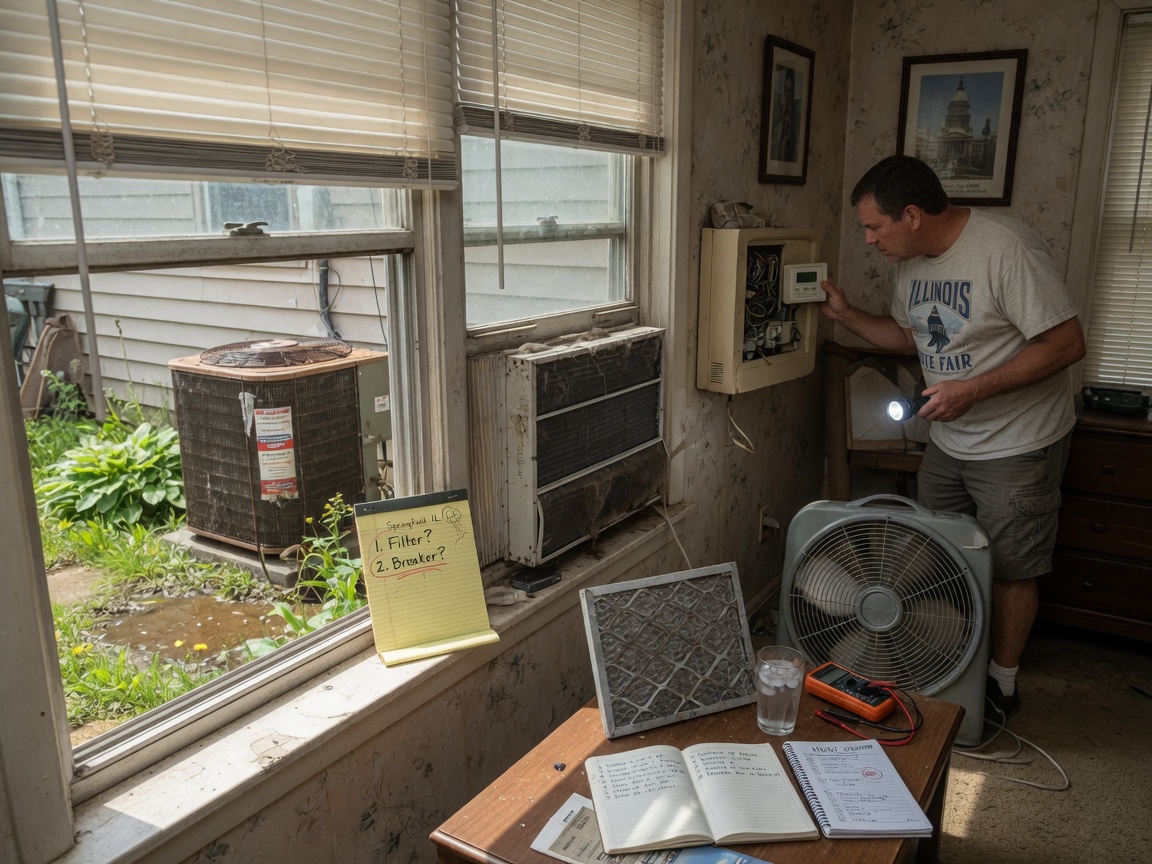
Before booking a service call, six checks take about fifteen minutes and resolve a meaningful share of no-cooling complaints: the thermostat settings and batteries, the air filter, the breaker and outdoor disconnect, the outdoor unit for debris, the condensate drain and its safety switch, and whether the indoor coil has frozen. Several of these cost nothing to fix, and knowing the answers makes the call more useful if you do need one.
Start at the thermostat. Confirm it is set to cool rather than heat or off, that the target temperature is genuinely below the current room temperature, and that the fan is on auto rather than on. Fan set to on runs the blower continuously even when the compressor is off, so you feel room-temperature air from the registers and reasonably conclude the system has failed. Replace the batteries if it is battery powered, since a fading thermostat can lose its ability to close the cooling contact while the display still looks normal.
Check the filter next. Pull it out and hold it to a light, and if you cannot see through it, replace it. A blocked filter starves the evaporator coil of airflow, which reduces output and can freeze the coil solid. Filters in Springfield homes load faster than the packaging suggests, particularly through spring pollen and the agricultural dust of late summer, so the ninety-day figure on the box is optimistic for this area.
Then check power in two places. The breaker panel is the obvious one, and a tripped breaker can be a harmless nuisance trip, so resetting it once is reasonable. The one people forget is the disconnect box on the exterior wall near the condenser, which contains a pull-out block that can work loose or be left out after service. If the breaker trips again immediately after resetting, stop there. Repeated tripping means a real electrical fault and continuing to reset it risks far more expensive damage.
Look at the outdoor unit itself. It needs clear airflow to reject the heat pulled from your house, and around here the fins collect cottonwood, grass clippings and field dust into a mat. Clear vegetation back to about two feet all round, remove leaves and debris from the top grille, and rinse the fins gently with a garden hose from the inside out where you can access it. Also note what you hear: fan spinning with no lower compressor hum underneath usually means a failed run capacitor, which is a technician job but a relatively cheap one.
Check the condensate drain, because this one stops systems that are otherwise perfectly healthy. Your AC produces water as it dehumidifies, and that water leaves through a drain line. Algae growth blocks the line, water backs up into the pan, and a float safety switch shuts the whole system down deliberately to prevent water damage. If you find standing water in the drain pan, that is your answer. Clearing the line often restores operation immediately.
Finally, look for ice. If the system has been running constantly with almost no air from the registers, check the indoor coil and the copper refrigerant line at the outdoor unit for ice. A frozen coil must be thawed before anyone can diagnose it, so switch the system to off, set the fan to on, and let it run for a few hours. Do not chip at the ice. Freezing is always a symptom of either restricted airflow or low refrigerant, so once it is thawed the underlying cause still needs finding.
If all six check out and you still have no cooling, you have narrowed it usefully and the call will be faster. The likely candidates at that point are a failed capacitor, a bad contactor, a failing fan motor, a refrigerant leak, or a compressor problem, and separating those needs gauges and electrical testing. A diagnostic runs $89 to $129 and is credited toward the repair. If it is a heat advisory day and the house is not holding a safe temperature for elderly residents, infants or anyone with a respiratory condition, treat it as an emergency rather than working through this list.